
football-money1

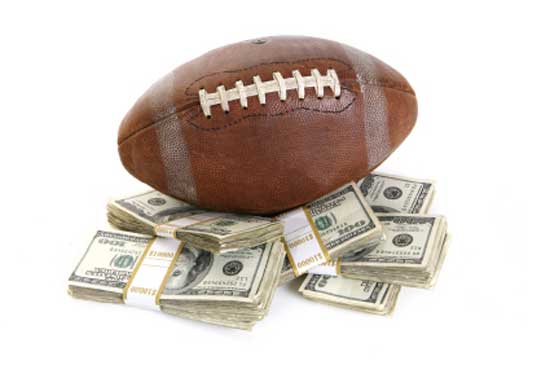
I’ve spent the better part of this series poking holes into some of the more popular arguments in regards to paying the players.  To recap, the series started with a look at what scholarships actually cover, directly answering the argument of players needing extra cash to live.  Then the revenue argument was discussed, examining just how much programs actually make from their athletic endeavors.  Finally, the previous installment of this series covered the Olympic model and pointed out, that while a good idea in theory, it fails to address the issue of keeping the student athletes in the classroom.

So what’s my big idea to solve this mess?

To start, we need to stop trying to think of quick “duct tape” methods to fix the problem.  The NCAA has quite the large issue on their hands and they have to take a look at how these issues keep on happening.  It’s becoming abundantly clear that the NCAA rulebook as it stands needs a complete overhaul.  It’s overcomplicated, full of loopholes, and poorly enforced.

Not only that, the NCAA needs to be honest with itself, most of the problems happen in FBS football, a system that they have let run completely out of control.  The BCS runs college football, the NCAA just attempts to enforce its rules on top of it.  Even if the NCAA swings the sanction hammer, the BCS could very well decide to leave their crowned champion alone for instance.  While we talk about out of control boosters giving kids free meals, gifts, and other illegal benefits, all the bowl games turn around and do the exact same thing.  That side of the equation just doesn’t quite balance.

Furthermore, unlike other sports, football has no minor league system.  Kids from other sports can go pro right out of high school save for football and basketball.  For football, the main issue is physical development as 18-19 year old kids simply aren’t physically ready for the demands of the NFL game (and for basketball, a laughable “one and done” rule is now in place, which I would argue is a complete joke and begging for issues–just take a look at O.J. Mayo).  Agents and boosters see this “minor league” gap and take advantage of it and the NFL won’t be making a minor league any time soon.

And why would they?  They know college football is there for free.

The fact is that the majority of athletes, football players included, know that a free college education is a great deal.  There are a select few that want theirs a bit early and are more than happy to cash in from boosters that have them convinced they deserve the world.  And of course, there are quite a lot of players that are falling into violation traps that range from “what, that’s actually a violation?” to “seriously, this is absurd”.

To start to truly solve this problem, the NCAA needs to light the current rule book on fire and start over.  There is very little doubt about this and you will be hard pressed to find anybody that will disagree.

Before any knew rules are made, the NCAA needs to fix it’s own organization.  They have no teeth.  If it weren’t for FBI investigations, jilted players, or angry boosters that end up blowing the whistle, the big scandals in college football would not have been uncovered.  The compliance offices that are supposed to enforce the NCAA’s rules are a joke in theory and the main reason is because the school’s themselves hire and set them up.  The NCAA needs to put their own people in these office and not only that, extend their function to include preemptive investigation.  Hire investigative reporters, hell make Chris Robinson your go-to guy if something smells funny if you have to.  There is no way the NCAA will ever get out in front of this situations unless they give themselves the power to do so.  It is far from a crazy idea, hell a rogue agent actually agrees with me.

Once you have an organization in place that can actually do something, now the NCAA can move on to fix, and more importantly, simplify their rules.

Firstly, the scholarship situation needs to change.  There are still some things that scholarships do not completely cover like “recommended books” for courses, which is really the academic equivalent to a football coach opening the weight room for an “optional workout”.  There are also inevitably materials that are needed for classes as well: notebooks, lab books, pens, etc.  There is no reason that these shouldn’t be covered as well in a scholarship as well.  Doing this shouldn’t make athletes any more special than a student on a academic scholarship as well–those students should, in all honesty be extended similar benefits.  A school wouldn’t put an athlete on the field without proper equipment, why poorly equip them in the classroom?

The scholarship should also do a better job of ensuring basic living needs are covered and if the NCAA were able to set up their own compliance personnel, housing and food would be very easily managed.  All housing arrangements would go directly go through NCAA compliance, allowing them to see exactly how much each athlete’s living costs are, and most importantly, be able to do things like budget out living costs for gas & utilities to a similar level of an on campus student.  Furthermore, you can have NCAA compliance actually help the kids budget costs if they live off campus and there should even be some room for exceptions on an occasional basis (seriously, if teams can do an occasional meal, how about an occasional extra tank of gas?).  This should completely negate the “starving athlete” argument for good.

Next, its time to redefine what amateur status is.  To me, an amateur status means that you do not get paid professionally for the sport you play.  So if a kid has a game worn jersey and he wants to sell it, let him.  If someone really wants to pay for a kid’s signature, go for it.  Somehow, selling a jersey to go get an iPod is illegal, but a bowl game giving a player an iPod directly isn’t.  A booster can’t buy a burger for an athlete and a restaurant owner can’t give discounts to players as well, yet the Cotton Bowl hosts an all-you-can-eat prime rib competition at a steak house here in Dallas (tradition!).  The NCAA is splitting hairs and wanting to enforce rules that quite frankly, they can’t.

Now, I’m not saying that it should be ok for cash to be handed out to athletes at will.  There should always be a trade of goods or work involved in any cash transaction.  This should also include any endorsement deal as well.  I doubt you will see too many companies dishing out serious money for a kid (risky investment, in my opinion), but if they choose to, a kid should be allowed to capitalize on his market value.  Note though, that is a clear distinction of being paid to play as the athlete is being paid for endorsing a project, not actually playing his sport.  Yes, they’d be famous because of the sport; however, hairs are again needlessly being split there.

To keep a student athlete in the classroom, all such transactions or endorsements should only be made when they are academically eligible to play.  Furthermore, money in these deals should be going to both the school as well as the athlete.  The athlete benefits from the school he is affiliated with just as the school benefits by said athlete so money should be going to both entities.  Should a player be ineligible, they shouldn’t also be able to benefit off their school as well.

Caps should also be placed on how much a player can make while they are in school.  However, an athlete should be able to also make what the market thinks he is worth as well.  To split the difference here, the NCAA should institute a cap on endorsements, sales, etc. and anything that is in excess of that cap goes into a trust for the player.  Once he goes pro or graduates, he can withdraw that money, but if he is caught getting additional benefits, he forfeits that money to the school.  This again, is why it would be so important to have a strong NCAA presence at every school to help enforce such a cap and to ensure funds are going to the proper parties at the proper time.

Everyone benefits from this.  The athlete gets a chance to make legitimate money (and has reason to not screw himself out of additional money by breaking rules), the schools can even get yet another piece of the pie as well, and the NCAA can actually focus on larger issues and violations.  This also can protect an athlete that say, misses out on a chance to go pro due to injury and thus misses out on cashing in on what value he had.

The other missing piece is that the NFL, NBA, etc need to step in and control their agents.  Any agent caught signing a player early or giving benefits to convince a player to sign for them should be fined and suspended with repeat offenders barred from representing any player as an agent.  It makes no sense for the schools and athletes that had nothing to do with agent violations suffer.  The offenders themselves should be punished and there is no reason that professional agents can’t be held accountable.

Furthermore, NFL has set up some precedence with their recent suspension of Pryor to actually punish a player for violations in college.  The NFL should not be a safe-haven for NCAA violators to jump ship (coaches included) when they know things are about to hit the fan.  The NFL could always fall back on their “actions unbecoming to the league” punishment that they love to toss around recently.  While some people have an issue with this, I don’t.  It doesn’t matter to me that the violations and rule breaking happened outside the NFL umbrella, by running off before they were caught, they have given the NFL and the franchise they play for a bad name when they are.

Yes, I realize this part is a tad more of a pipe-dream and a possible CBA nightmare; however, as stated before the NFL is benefiting from college football as their free minor league system and they should work hand in hand with the NCAA to help discourage violations from athletes and agents alike.  The fact remains that while small steps can be made to make things better, the NFL and other professional league cooperating with the NCAA is still a major step in making sure that the NCAA rules are given more than lip service.

In the end though, there is no ironclad solution to stop cheating completely.  While I and other people can figure out a multitude of ways of trying to eliminate cheating from NCAA athletics, nothing will stop pure greed and devil-may-care attitudes from corrupting the game.  Nevin Shapiro was not the first nor will he be the last rogue booster that will decide he can do whatever the hell he wants.  Certain athletes will always feel entitled to a bigger piece of the pie no matter how many concessions the NCAA gives them as well.  The best outcome that we can hope for is that the NCAA tries to make serious changes in their organization and in their rules.  As of now, the NCAA is consistently focusing on the speck of sawdust in everyone else’s eyes while the gigantic log that is their own incompetence and hypocrisy in theirs.  The times have changed and the NCAA must change with them; otherwise, the boosters, agents and athletes will continue to run college sports.

It’s time to get back on track with this thing. Football season is almost upon us and this series needs to be finished before then!

Thus far, we’ve covered what a student athlete can get with their scholarships and addressed the revenue argument for why players should be paid. Now it’s time to move on to another common argument to pay the players and that’s using the Olympic Model. Not only is this the next logical stop, but it also deals with another sticky situation in college athletics: endorsements.

For those that are unaware of what the current Olympic Model is, here is a quick run down. Originally, only amateur athletes would participate in the Games, but now pros are allowed to play, and individuals can receive endorsements and pay from their sponsors. One important thing to note here is that the players are not being paid by simply being on the team.

So the Olympics, to a point, are very much like college athletics. You have a large group of athletes on a national team ready to compete, but a select few are actually making money. The only difference here is that the athletes making money at the Olympics are doing so legitimately.

The Olympic Model also covers some sticky endorsement and merchandise situations as well. With this model, any likeness of the athletes can be used and easily compensated for plus if an athlete’s jersey is sold, they can receive royalties.  Simple right?

Well, not really.

First off, consider jersey sales alone.  Many schools, and ND is one, do not print names on the back of their jerseys (yes, yes, bowl game exception, I know).  Now while you can make an argument that a player would only receive money for the time they were at the school, but there are some issues there as well.  The #3 is still a huge seller at ND, and it isn’t just because of Michael Floyd, but because of Joe Montana.  The #1 as well is quite the generic number that many schools use in their jersey sales as well that has no relation to a player.

So this means players can get rather “lucky” by coming into a program with said famous numbers available.  What a nice little recruiting tool that could be used as well for a player looking to maximize their revenue.

Even when you consider third-party sponsors, another sticky situation arises.  If a player is making a considerable amount of cash, how do you keep him in the classroom when he is making considerable money?  In short, you really can’t save for the threat of said player becoming academically ineligible.  While a sponsor could simply just cut ties, but, depending on the money involved, a sponsor would likely want to keep their investment protected and would definitely cut a few academic corners here and there to help out.

If you think it’s hard to control renegade boosters, have fun with an entire corporation.

I’ll be honest, despite the fact that I am punching some holes into the Olympic Model argument, I do see it as having potential.  The NCAA could possibly use this as a starting point if they wished to go that route; however, it doesn’t completely cover the situations that exist in the college game.  Perhaps with some additional regulations, it could be a possibility (and I will discuss this in a later post), but on its own, it is still lacking.

Now that we have covered the basic needs and living costs of a student athlete, it is time to jump into what, in my opinion, is the biggest argument for paying the players.  The argument is simple: players bring in far more money to their schools than what their scholarships cover and therefore should be receive additional money for their hard work.  It would make a lot of sense too, if everything was really just that simple; however, the numbers are far more complicated.

Let’s get one thing out of the way, college football is a profitable business…well, for most schools.  Forbes did a great study on profit margins for ND and all BCS conferences to examine just how much profit is being made.  Below are the average profits from each conference in just football from 2009-2010:

Big Ten ($10.7m)

SEC ($8.2m)

Big 12 ($7.0m)

ACC ($2.6m)

Pac-10 ($1.8m)

Big East ($982k)

Notre Dame makes over $34 million in profit on it’s football program.  Other big individual profit schools are Georgia at over $52 million, Penn State at over $50 million, and Michigan & Florida check in at just over $44 million.

While those are some rather huge numbers, this little tidbit also appears in the Forbe’s ND article:

A report from the NCAA indicates that only 14 Division 1 schools broke even or made money in their athletic department last year without institutional support, and only 6 schools did it in each of the years from 2004-2009. Which means that most of the schools you’ve seen turning a profit in my series have been doing so with the aid of monies from outside the athletic department. For example, University of Virginia and Georgia Tech indicated to me they received upwards of $12 million and $4 million a year, respectively, from student activity fees. That is considered direct institutional support. In fact, the average amount of institutional support received by athletic departments went up from $8m in 2007-2008 to $10.2m in 2008-2009.

So once you place all of the other programs into the financial equation, you have the reality that, overall, schools loose money from their athletic endeavors.  14 schools out of the 120 total in FBS means that just barely over 10% of these schools are turning a profit.

Now, that quote does mention that schools overall do turn profits thanks to “institutional support”.  One of the sources mentioned above are student activity fees–yes, that means money that students pay (beyond just their tickets) are going to fill the gap that athletic programs leave.  A USA Today study had the following to say on the subject:

[A]s drops in ticket sales, declining endowments and other issues have translated to increased dependence on subsidies at Division I public schools, USA TODAY found in its most recent examination of college athletic finances.

About $1.8 billion in student fees and university funds went to cover gaps in athletic operating costs at those schools last year, the newspaper found. The analysis was based on thousands of pages of inflation-adjusted NCAA athletic data reported since 2005, from open-records requests to hundreds of Division I public schools.

With many states making recession-driven cuts in higher education funding, school subsidies for athletics are starting to become a target. Last week, the Iowa board of regents instructed its three schools to make plans to “substantially reduce or eliminate” support of athletics from tuition and taxpayer dollars; Northern Iowa had been planning to tap booster funds to finance a new deal for Jacobson.

So tuition, student fees, booster funds, and in some cases, even tax dollars all fall under this umbrella of “institutional support” to balance the budget and, just to note, ticket sales and concessions do not fall under this umbrella as they are considered revenue from athletics.

Granted, some schools will likely see a financial boost in upcoming seasons.  The Big Ten, SEC, Big XII, and Pac 12 have all inked new TV deals or, in the case of the Big Ten, already have their own network.  New independent BYU will have its own TV network as will the Texas Longhorns.

Despite these increases though, we won’t be able to have any hard data on how much this will balance the budget for some schools until a year or two from now.  Just because the money is being pumped in, doesn’t mean schools won’t pump it right back out for new facilities or other athletic expenses like say the ever increasing salaries for head coaches and their staff.  And don’t think for a second it won’t happen either.  More “free money” means more spent to attract recruits and that race will indeed escalate spending so schools can stay competitive.

So on top of all of this, how is it wise to add in new player salaries into the budget?  Not to mention, if we are truly paying players that only bring in actual profit, how can the NCAA justify the practice of paying players at only certain schools, and only for one or two sports at most?  And if they were to allow such a practice, how do you control and or cap the salaries?

And that’s just the logistical issues off the top of my head.  Have fun trying to get a kid go to class and stay academically eligible when they are now making money for playing sports.  That’s a whole other Pandora’s Box that will fly wide open.

Not to mention players in the bigger revenue sports already see increased benefits than other athletics.  They get more issued gear, they have the nicer facilities, they stay in nicer hotels, they take chartered flights, and, in the case of football, they get to take advantage of free gifts from bowl games.  As an example, as just a football manager (that didn’t even work the actual game), I received a free ticket to the Fiesta Bowl, free sweatshirt, free shirt, and a free pair of shorts.  I know managers that worked the game got some more stuff, and the players got the full BCS bowl swag package that made my $200-300 gift seem like nothing.

The bottom line though is that the “simple solution” of paying the players simply based on the money they bring in, isn’t that simple at all.  With college’s already needing to use additional funding beyond just athletic revenue, the numbers just don’t quite add up and could very well cause college athletics to create a bigger red line on quite a few balance sheets.  Athletes in big revenue sports already receive additional benefits; however, the revenue argument alone simply isn’t enough, in my opinion, to be the sole justification of paying the players.

Agents, pay to play, free cars, free houses, memorabilia for tattoos…the list can go and on in this seemingly unending stream of recent scandals in college sports.  There is no doubt that there is a severe lack of institutional control all over college sports, and I’m not talking about the universities found guilty of violations, I’m talking about the NCAA itself.

The NCAA is only able to handle these issues after the fact, and seemingly arbitrarily at that.  Look, as a ND fan, I enjoy the USC sanctions as much as anyone, but as of right now, the majority of the people suffering are the kids that did nothing wrong.  Reggie Bush still has his high-dollar NFL contract, and even though his Heisman was stripped, he still has his Super Bowl ring.  Pete Carroll skipped town to sneak the below-.500 Seahawks into the NFL playoffs.  Hell, if we even go back to the Pony Express scandal, it sure looks like Craig James is doing quite well, he’s still (somehow) employed by ESPN (and helped destroy another coach’s career as well).

More recently, Ohio State is bracing themselves for their own fate at the hands of the NCAA.  The same thing will happen there.  Tressel may or may not ever get a coaching job again, but, even if his name is forever mud, he can easily retire very comfortably.  And Pryor?  He can rid off into the supplemental draft and grab himself an NFL contract and avoid all retribution at the hands of the NCAA.  Again, the teammates left behind will suffer.

There is no doubt the NCAA has major issues: the system itself is broken.  However, the “solution” that seems to continue to be tossed around to fix the problem might be the worst idea possible and that’s paying the players.  I even saw on Twitter today that the ‘Ol Ball Coach thinks it is a good idea as well.

That is what prompted this series of posts.  Personally, I am completely against the idea, and this series will examine the issue and upon conclusion, attempt to examine possible solutions for this major issue.  In my mind, the only real way to make some serious progress will be to get past the idea of paying the players and try to get to the real root of the issue.

I have no real schedule for how often these posts will happen or how many I will make.  I tried to do one initial post on this and my research has already lead to ideas for a handful of shorter posts instead of a long novel.  Keep an eye out for them, it should be a rather interesting discussion.

© 2011 NDtex.com This site is not endorsed, sponsored, or affiliated with the University of Notre Dame. Suffusion theme by Sayontan Sinha